;
;
Introduction and Historical Evolution of Filmmaking
From the late nineteenth century, when the first attempts to record moving images were formed by combining photography, optics, and mechanics, to the present day, this medium has undergone fundamental transformations. The introduction of synchronized sound in the 1920s, the emergence of color films in the 1930s, and finally the digital revolution in the late twentieth century have each in turn redefined the structure and process of production.
The digital revolution in the 1990s and the introduction of non-linear editing systems (such as Avid Media Composer in 1989) drastically reduced the time and costs associated with physical film splicing and established a modern workflow that shapes production standards today. In the current professional ecosystem, video production is not merely pressing the record button; rather, it is a precise architecture of artistic expertise, lighting engineering, sound science, and logistics management. In this architecture, the "Production" phase, or principal photography, is considered the central core and the most intense part of the work. In this educational article, with an analytical and deep perspective, we dissect the production stage in the video industry and examine its artistic, technical, and managerial dimensions.
The Five-Stage Structure of Video Production and the Position of the Production Stage
To better understand the importance of the production phase, it must be examined within the context of the entire life cycle of a video project. Professionals and film studios divide this life cycle into five inseparable stages, each of which is a prerequisite for the next. The Development stage is the starting point where project goals, target audience, and core concept are defined, and market research and financial assessments are conducted. Following this is the Pre-production phase. In this phase, the script is converted into a shot list and storyboard, locations are scouted and selected, and precise budget and timeline planning is carried out.
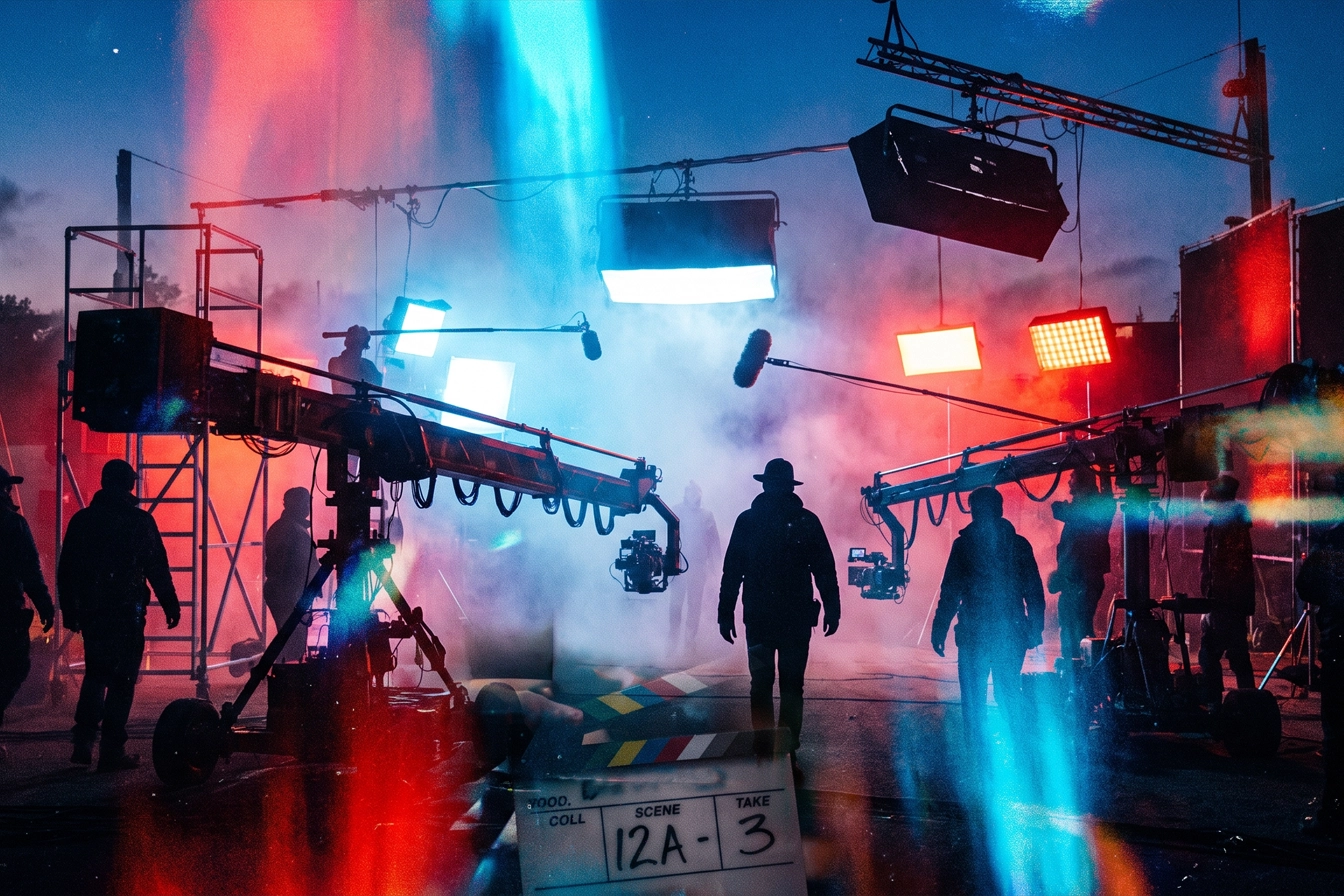
The Production stage is the third and most executive part of this cycle. All the planning on paper becomes a physical reality during this short period. After the end of this phase, the Post-production stage begins, which includes non-linear editing, color grading, sound design, and the addition of visual effects. Finally, the Distribution and Marketing stage arrives, which delivers the final work to audiences across various platforms.
The distribution of financial resources across these stages indicates the high sensitivity of the production phase. The following table shows the structure of budget allocation and operational focus in the different phases of a professional project:
| Production Stage | Approximate Share of Total Budget | Main Focus and Phase Output |
|---|---|---|
| Development and Strategy | 10 percent | Writing the initial draft, financing, market research, and resolving legal barriers. |
| Pre-production | 20 to 30 percent | Hiring crew, set design, storyboarding, daily scheduling, and procuring equipment. |
| Production (Principal Photography) | 30 to 60 percent | Deployment on location, managing large teams, principal photography, and on-set sound recording. |
| Post-production | 10 to 20 percent | Non-linear editing, color correction, compositing, visual effects, and final export. |
| Distribution and Release | Variable (depends on marketing) | Optimizing formats for platforms, advertising, and analyzing audience feedback data. |
As the data shows, the production stage is the most expensive part of the project. During this time frame, the costs associated with the daily wages of dozens of technical crew members, the rental of heavy cinematic equipment, and locations reach their peak. For this reason, production managers use budget tracking systems and "Daily Production Reports" (DPRs). These reports include details of the crew's working hours, scenes filmed, and potential incidents, acting as legal and financial documents for budget control.
Key Members of the Production Department and Organizational Dynamics
A modern film set is an intertwined network of various specialties. The Director, as the artistic leader of the project, is responsible for interpreting the script, creating the overall vision, and guiding the actors. To implement this vision, they work directly with the Director of Photography (DP). The DP is the visual mastermind of the project and makes key decisions regarding the choice of camera, lenses, viewing angles, and the complex lighting system.
Alongside these two artistic roles, the 1st Assistant Director (1st AD) acts as the operational manager of the set. They are responsible for controlling schedules and, by managing Call Sheets, ensuring that the team achieves its goals within the designated time. The sound department is also led by the production sound recordist, who is tasked with deploying microphones and flawlessly recording dialogues and ambient sounds. In the lighting and camera department, lighting technicians (Gaffers) and grip equipment operators (Grips) work under the DP to physically execute the lighting plans. This precise division of labor prevents chaos on location and maximizes production efficiency.
Operational Directing and Guiding Non-Professional Actors
One of the first steps taken at the start of filming any sequence is the "Blocking" process. Blocking means precisely determining the movement path of the actors and the positioning and movement of the camera within the three-dimensional space of the set. This process prevents the movement of crew members from interfering, stops unwanted shadows from falling on the subject's face, and allows the lighting team to calibrate their focal points.
In corporate videos, documentaries, and educational content, the director often deals with managers, experts, or ordinary people instead of professional actors. These individuals usually experience severe anxiety in front of the camera and develop an artificial delivery. To extract a natural performance from non-professional actors, set psychology is of vital importance. Before filming begins, the director must break the ice through informal conversations and provide a safe space for the subject. Clearing the set of unnecessary spectators (such as upper management or colleagues) is one of the most effective ways to reduce the stress of these individuals.
Furthermore, forcing a non-professional to memorize long texts will only result in repeated unsuccessful takes. The professional solution is to break the text down into short blocks of two to three sentences. The subject can deliver these short sections with complete mastery, and during the post-production stage, the editor uses supplementary shots (B-Roll) to cover the gaps between these sentences. Additionally, using calming commands instead of tension-inducing cinematic jargon (like shouting the word "Action") and providing positive and constructive feedback helps the subject continue their performance with greater confidence.
Aesthetics and Image Engineering: Principles of Cinematography
Cinematography in the production phase requires complex technical decision-making to capture images with the highest dynamic range and flexibility for editing. One of the fundamental concepts in this section is separating principal shots (A-Roll) from supplementary shots (B-Roll). Principal shots narrate the core of the story and include interviews and dialogues. In contrast, supplementary shots include detail images, establishing shots, environmental reactions, and cutaways, which allow the editor to control the rhythm of the story and prevent jump cuts.
To maintain visual consistency, camera settings must be controlled completely manually. The shutter speed to create natural motion blur should follow the "180-degree rule"; meaning the shutter speed is always set to twice the filming frame rate. Also, manually setting the white balance using calibrated gray cards ensures the stability of the subjects' skin tones across all takes.
Another inviolable principle in cinematography is the principle of "visual continuity". The Script Supervisor is tasked with ensuring that there are no visual contradictions between the wide and close-up shots of a sequence by recording reference images of the position of objects, the state of clothing, and the actors' line of sight.
Lighting Design and Sound Engineering on the Production Set
Lighting is not just a tool for illumination; rather, it is the visual language of the film for conveying atmosphere, dimension, and depth. The basic technique and gold standard in studio productions and interviews is "Three-Point Lighting". This structure includes the "Key Light" to illuminate the main structure of the face at a 45-degree angle, the "Fill Light" to soften the shadows created by the key light with an intensity of about 50 to 75 percent, and finally the "Backlight/Rim Light" to create a halo of light around the subject and separate them from the background. Using diffusers to create "soft light" provides gentle and attractive shadows for the faces of presenters and actors, while "hard light" has more dramatic applications in creating suspense.
Parallel to lighting, on-set sound recording plays a vital role in maintaining the audience's focus. Poor audio quality can instantly destroy the credibility of a high-quality visual product. Depending on the nature of the scene, sound recordists use directional boom microphones (Shotgun) for group recordings and to keep equipment hidden from the frame, and lavalier microphones for interviews and capturing the isolated voices of individuals. Standard practices on set include logging information with a clapperboard to create a reference point for audio and video synchronization, as well as recording a few minutes of ambient silence (Room Tone) at the end of the shoot. This ambient sound helps the sound designer in the post-production stage to fill the audio gaps between cuts and create a smooth and continuous flow in the audio track.
Modern Technologies: Chroma Key Technique and the Evolution of Virtual Production
The production phase in recent years has witnessed the introduction of transformative technologies that have blurred the lines between physical reality and computer-generated imagery. One of the most common of these methods is the use of a green screen. To execute a professional chroma key, maintaining physical distance is very important; the subject must be at least two to three meters away from the screen to prevent distracting shadows from falling on the screen and to avoid green spill on the edges of the subject's clothes and hair. The lighting of the green screen must be completely independent of the subject, set with a uniform intensity in the range of 50 percent IRE so that the color separation process in post-production is done with the least quality loss.
However, the inherent challenges of the green screen have led to the emergence of a more advanced technology called "Virtual Production". This method, which has blended the boundaries of pre-production, production, and post-production, utilizes massive LED walls and real-time rendering engines (like Unreal Engine). In virtual production, 3D environments are displayed on LED panels instantaneously and in sync with camera tracking. The following table provides an analytical comparison between these two approaches:
| Technical and Executive Components | Traditional Green Screen Method | Virtual Production with LED Displays |
|---|---|---|
| Interaction of Light and Environment | The problem of reflection and green color spill on the subject, which requires complex corrections in post-production. | LED panels emit the realistic lighting of the virtual environment and natural reflections directly onto the subject. |
| Sequence of Visual Effects | Completely reliant on a linear and time-consuming process in the post-production stage. | Creation of In-Camera VFX and creative decision-making in real-time and on set. |
| Actors' Experience | The actor does not see the space and must mentally imagine the scale and environment. | The actor clearly sees the environment, architecture, and atmosphere around them, leading to a much more natural performance. |
| Optimization of Budget and Logistics | Variable post-production costs are very high, and the risk of last-minute changes is significant. | Initial setup costs are high, but the need for multiple physical locations and costly travel is drastically reduced. |
In addition to significantly improving aesthetics, virtual production provides directors with the possibility of "Previs," "Stuntvis," and executing live compositing (Simulcam), which results in massive savings in post-production processes.
Ethical Considerations and Documentation Standards
In certain productions, such as documentary films and journalistic videos, the production stage requires adherence to specific ethical considerations. Modern approaches in documentary filmmaking (such as the standards raised by organizations like FilmAid) place a heavy emphasis on the informed consent of the subjects, their physical and psychological safety, and examining the positionality of the filmmaker relative to the target community. In such productions, the director and producer must have a clear understanding of how the presence of the camera affects the cultural and social dynamics of the location before filming begins. The goal is to extract an honest narrative without unfair manipulation during the filming stage, in such a way that the subjects do not feel commodified and their human dignity is preserved.
Data Management and the End of the Shoot Day Process (Wrap)
Production is not merely focused on capturing light and sound; safeguarding this recorded data is the backbone of digital production. The Digital Imaging Technician (DIT) plays a key role on set. Their primary responsibility is managing the data workflow from the moment the memory card leaves the camera to its transfer to backup systems.
The gold standard in video data management is the "3-2-1" backup rule. This rule dictates that three separate copies of the recorded footage should be made; these copies must be duplicated on at least two different types of storage media (such as external hard drives and high-speed SSDs), and at least one of these copies must be kept in a different geographical location (or on secure cloud servers). After verifying the integrity of all files and logging the metadata, the process of finishing work, commonly known as the "Wrap," begins. This stage includes safely turning off equipment, packing cameras and lenses, submitting daily production reports, and preparing the Call Sheets for the next working day.
Conclusion
The production stage in the video making industry is a fascinating intersection of art, psychology, engineering, and time management. This phase, as the most operational and expensive part of a project's life cycle, requires a precise architecture of skills to transform theoretical planning into visual and auditory documents. From artistic blocking and manual camera settings to capture visual consistency, to the engineering of light and ambient sound, every decision made in this stage directly impacts the final output.
Directors, by creating a psychologically safe space for their subjects—especially non-professionals—and smartly utilizing pioneering technologies such as virtual production and chroma key, can bypass physical and logistical limitations and create works with the highest global standards. Ultimately, comprehensive mastery over the processes of the production phase guarantees that the editing team in the post-production stage will face the richest, cleanest, and most flexible raw materials possible, enabling them to portray the narrative to the audience in the most powerful way possible.